
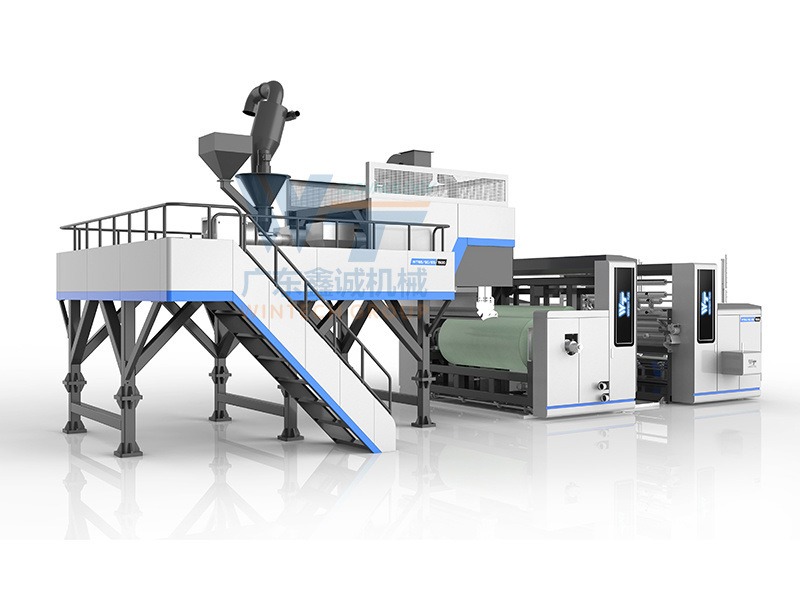
When production managers compare cast film machines, the conversation usually starts with output speed. While speed certainly matters, it tells only part of the story. True machine performance is defined by the combination of output speed, output stability, film quality consistency, energy efficiency, and ease of maintenance. Focusing on one metric while ignoring the others is a common mistake that leads to disappointment after installation. This article covers the performance features that deserve serious comparison before you sign any purchase agreement.
Output Speed and Its Real-World Meaning
Nominal output speed, usually expressed in meters per minute or kilograms per hour, is the figure manufacturers highlight most prominently. However, nominal speed is the maximum speed under ideal conditions. Real-world speed depends on the resin formulation you are running, the film thickness you are producing, and the ambient conditions in your facility.
More importantly, sustainable output speed matters more than peak speed. A cast film machine that can achieve 300 meters per minute but runs stably at only 220 meters per minute due to recurring film breaks or edge instability will always underperform a machine rated at 250 meters per minute that runs steadily at 240 meters per minute with no interruptions. Ask manufacturers for realistic sustainable operating speeds, not just peak specifications.
Film Thickness Tolerance
Thickness consistency is arguably the most important quality parameter for cast film. If the film varies in thickness across its width or along its length, it will wind unevenly onto rolls and perform inconsistently during application. Tight thickness tolerance is a result of die head engineering precision and casting roll temperature control.
A good cast film machine maintains thickness variation within very tight limits across the full width of the film. This requires a high-precision die head with an effective automatic or manual profile adjustment system, as well as a casting roll temperature control system that responds quickly to minor process variations.
Casting Roll Temperature Control
The casting roll is where the molten film is quenched and its properties are set. Consistent casting roll temperature directly determines film clarity, surface quality, and physical properties. A machine with precise casting roll temperature control will produce more consistent film than one with looser temperature management.
Some machines use zonal temperature control across the roll width, which allows operators to fine-tune the temperature profile and compensate for any tendency toward edge or center variations. This level of control is particularly valuable when producing thin-gauge films where even small temperature variations have noticeable effects on the finished product.
Edge Trim System Efficiency
Every cast film extrusion line produces thicker edges at the outermost parts of the film width. These edges must be trimmed to achieve a uniform film width, and the trim material is typically recycled back into the process as regrind. The efficiency of the edge trim system determines how much material you lose to waste and how well the recycled material integrates back into the product.
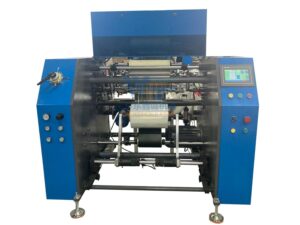
A well-designed edge trim system on a cast film extrusion line minimizes trim width, handles the trimmed material cleanly, and reintroduces it to the process without causing quality issues. Poor edge trim management increases material cost and can introduce quality problems if the regrind is not handled properly.
Winding System and Roll Quality
The winding system is the last major component in the production chain, and it has a direct impact on the commercial quality of the finished rolls.
- Winding tension control determines how tightly the film is wound onto the core, which affects roll hardness and shape.
- Surface vs center winding methods produce different roll characteristics suited to different film types and end-use applications.
- Automatic roll change capability allows production to continue without stops when a roll reaches its target diameter, which is critical for high-speed lines.
- Core loading system affects how quickly new cores can be positioned and winding resumed after a roll change.
Energy Efficiency Ratings
Modern cast film machines are significantly more energy-efficient than machines produced a decade ago. The extruder drive, heating zones, cooling system, and winding system all contribute to the overall energy consumption profile. When comparing machines, ask for the specific energy consumption per kilogram of film produced. This figure is a reliable indicator of long-term operating cost differences between options.
Conclusion
Comparing cast film machines on performance means looking well beyond the speed specification. Thickness tolerance, casting roll temperature control, edge trim efficiency, winding quality, and energy consumption are all performance factors that affect your daily output, your product quality, and your operating cost. Evaluate each one carefully, and you will make an investment that delivers measurable results.
